
When examining the European Roulette slot machine at first, the panel showing minimum bet options frequently becomes the most important beginning. This number is not a random number hidden in the corner of the interface; it serves as the gatekeeper that determines every decision we take from the moment we start the reels. With European Roulette slots, which combine the visual drama of the classic table game with the fast mathematics of a digital slot, the minimum wager establishes the tempo for bankroll duration, the rate with which bonus rounds are seen and the practical availability of the entire feature set. We often see options that move from a very modest per-spin cost up to amounts intended for high-volume play, and grasping the mechanics behind these tiers uncovers far more about the game than a simple price tag could. For users who want to extract the full entertainment value without over-committing funds, examining the relationship between stake size, payline activation and symbol interaction becomes an essential part of the pre-game process.
The Design of the European Roulette Slot Machine
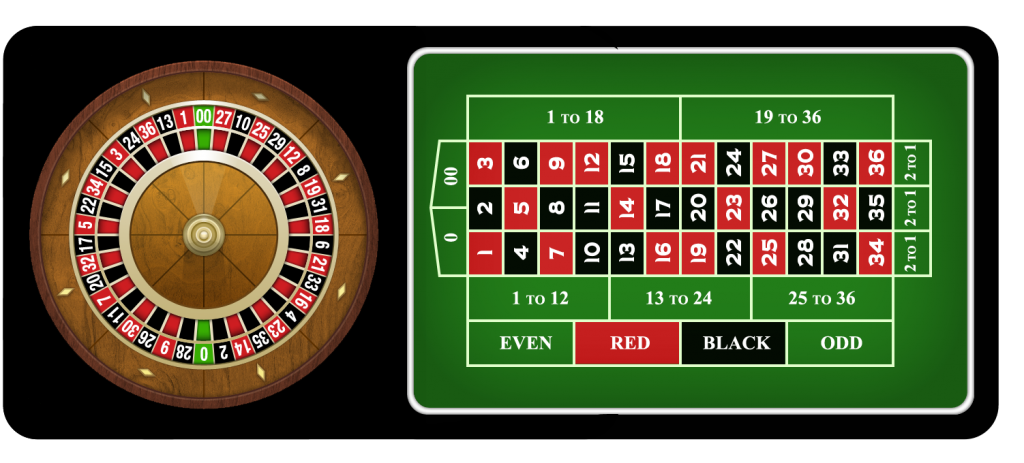
European Roulette slots typically use a typical grid structure featuring five reels and three rows, a formation that has become the foundation of modern video slot design. What distinguishes this game from a standard fruit machine is the intentional thematic integration of roulette elements into both the backdrop and the active symbol set. We frequently find the roulette wheel itself, the ivory ball, numbered chips, the green baize layout and classic dealer motifs occupying positions across the twenty or twenty-five fixed paylines that most builds use. These are not simply decorative overlays. The paylines in European Roulette slots typically run from left to right in a single string, and the minimum bet we pick interacts directly with how many of these lines are currently processing wins on every spin. In some versions, the base game fixes all paylines into a always active state, implying our chosen coin size is multiplied by the total line count to give the overall stake. In others, the interface allows a line selector, and the minimum bet then means the smallest amount we can wager while having at least one line live. Understanding this architecture stops the common mistake of assuming a 0.10 label means a 0.10 total per spin when it might really require multiplying across twenty lines.
The reel array is commonly composed of high-value roulette symbols, like the single-zero slot, the roulette table and tower of chips, together with lesser card ranks presented in chrome or bright finishes to reflect casino floor illumination. Wild symbols regularly take the form of the wheel itself or a bright golden ball and replace all standard icons aside from the scatter. When the wild lands, it typically grows or includes a random multiplier, notably in slots that push volatility into the higher mid range. The scatter, normally shown as a bonus token or a double zero symbol, is the goal.com factor that triggers the free spins round. In the base game, a minimum of three scatters showing up at any position on the reels initiate the bonus round, and we have found that this trigger mechanism is fully independent of the stake level, which is a vital detail for low-stakes players. If we spin at 0.20 or 20.00, the likelihood of scatter appearance remains governed solely by the random number generator. This indicates the architecture provides the identical visual experience and feature entry chance at the minimum permitted wager as it does at the maximum, a fact we always check in the paytable before committing funds.
Accessing Bonus Features While Wagering the Minimum
The bonus features included in European Roulette slots are the main sources of excitement, and we are regularly asked whether playing at the minimum bet diminishes the quality or frequency of these events. The short answer is that feature triggers remain probability-based and separate from stake size. The scatter symbols that trigger the free spins round, the wild roulette wheel that randomly gives a multiplier boost on any spin and the chip collection mechanics that fill a meter towards a locked prize all activate through the same random number generator calls at 0.20 as they do at 20.00. What we do observe is that some slots attach a small conditional multiplier to bonus round wins that relates to the total bet, which means the absolute cash reward from a free spins sequence will be lower at the minimum, but the multiplier applied to the triggering bet is unchanged. For example, if a free spins bonus retriggers at a 15x total bet multiplier, that multiplier remains 15x whether the total bet is 0.20 or 2.00, delivering 3.00 or 30.00 respectively. The visual presentation, the number of free spins, the special expanding symbols and the retrigger mechanics are identical. This parity is one of the most encouraging aspects of the slot’s design for budget-conscious players.
However, we also need to be aware of a minor but significant detail that can show up in the feature rules: bonus buy options. Many contemporary European Roulette slots feature a “buy bonus” button that lets players acquire direct entry into the free spins feature for a multiple of the current total bet, often 50x to 100x. When we are playing at the minimum, this purchase price scales down accordingly, changing what would be a 50.00 buy-in at a 1.00 stake into a 10.00 or 12.50 buy-in at a 0.20 stake. This makes the bonus buy reachable from a far smaller budget, practically compressing the cost of immediate feature access into a range that fits a prudent bankroll strategy. Yet we advise against frequent bonus buys at the minimum, because the RTP of a purchased feature can differ slightly from the base game RTP and the scaled-down reward still needs to exceed the buy cost over many repetitions for it to be a net-positive tactic. The most reliable approach we have found is to use the minimum bet to observe natural feature triggers over an extended number of spins, record the average interval between bonuses and then determine whether the buy option represents fair value. This careful method turns the minimum stake into a reconnaissance tool that guides much larger decisions later on.
The way Minimum Bet Limits Establish the Game’s Entry Point
The minimum permitted wager on a European Roulette slot serves as a filter that separates players by budget and risk tolerance before a single spin is taken. In the UK-facing online space, we commonly encounter minimum bet values that extend from 0.10 to 0.25 per spin, a band wide enough to accommodate casual browsers while still generating enough turnover frequency for the game engine to provide regular feature triggers within a typical session. The interface displays this minimum through a coin size selector and a bet level toggle, and the product of these two values combined with the active line count generates the final stake. When the slot works on a fixed twenty-line basis, a 0.01 coin size at bet level one amounts to a 0.20 total spin, a figure we see so often that it has become something of an industry standard for entry-level roulette-themed slots. Some operators compact this further by offering a single-click minimum bet button that instantly adjusts the configuration to the lowest possible setting, which removes guesswork but also risks masking the per-line cost from the player’s view.
This entry-point number is not random. It is tuned by the game developer to preserve a specific pace of play and to ensure that the mathematical model, including the hit frequency and the distribution of small wins, operates consistently across all bet levels. When we evaluate the same slot at 0.20 and at 2.00, we do not notice a different reel map or a shifted random number generator; what varies is the euro amount attached to each win combination while the underlying probabilities stay the same. For us, this means the minimum bet is not a downgraded experience but simply a scaled version of the full game. A bonus round triggered on a 0.20 stake will still spin through the same number of free games with the same special symbol behaviour, and a line of five premium symbols will still scale the line bet by the same factor shown in the paytable. The monetary return is commensurate, not penalised. Understanding this equivalence is what often provides players the confidence to start at the minimum and gradually raise their stake as they understand the volatility pattern and the rhythm of feature drops.
The Calculation of Small Bets: Payout Percentage and Risk at Minimum Bets

Return to Player percentage is one of those specifications we analyze right reddit.com away because it tells us how much of our total stake the slot is programmed to pay out over an prolonged session. For European Roulette slots, the RTP typically clusters between 95.5 percent and 96.8 percent, a span that holds steady irrespective of whether we bet at the absolute minimum or the maximum. This stability is a intentional design decision; the RNG does not modify its dividend rate based on stake size. What varies perceptibly at minimum wagers, however, is the individual experience with variance. The slot’s variance level, often labeled as mid to high in this game type, dictates the spread of returns. At minimum bet levels, we notice that a high-volatility profile can produce extended losing streaks where the bankroll declines very gradually in absolute terms, because each losing spin costs only 0.20 or 0.25, but the comebacks that follow are also smaller in monetary terms. This produces a characteristic emotional cycle: the bankroll feels stronger, yet the big payout that compensates for a extended dry spell remains difficult to achieve because it is reduced to match the small stake.
We usually suggest players to view risk at small wagers not as a smaller variant of the actual game but as a trial for the slot’s payment structure. Because the bet per line is tiny, we can afford to spin through countless spins, which makes it easier to detect the true frequency of scatter hits, the typical count of turns between bonus rounds and the practical effect of any increasing multiplier effect. Over 5,000 spins at 0.20, the statistical prediction indicates a expected loss of approximately three to four percent of the 1,000 wagered, but in actual play the real balance will fluctuate well above and below that line due to the game’s standard deviation. The low-stake setting is also where we can reliably map whether the slot’s advertised hit frequency of, for instance, one in three spins proves correct, because the cost of each piece of information is insignificant. This turns low-stake play into a type of prolonged study that enhances our grasp of the game when we eventually choose to raise the stake amount. Without this foundation, jumping straight to a average wager can cause misreading a standard deviation as a broken payout model.
Decoding the Paytable: Images, Rows and Returns
The paytable of a European Roulette slot is not a static list of numbers but a dynamic calculator that needs to be interpreted alongside the selected total bet. When we access the information screen, we see each symbol’s reward shown as a multiplier of the bet per line or, more commonly in modern versions, as a cash value that automatically adjusts to the current total stake. This real-time adjustment is particularly useful for minimum bet players because it removes the mental arithmetic of converting line multipliers into actual returns. A five-of-a-kind hit with the roulette wheel wild, for instance, might show a prize of 500 coins in the paytable at minimum bet, which could result in a 50x total stake reward once the coin size and line multiplication are factored in. Lower-tier symbols like the 10, J, and Q typically offer between 5x and 25x the line bet for a full house, while the premium table icons can climb well past 100x. What we find especially informative is the gap between the second-highest and highest payouts, because this often signals where the real value sits when we are limiting ourselves to the smallest wager.
We also pay close attention to how the paytable treats wild combinations. A line of five wilds is usually the top non-jackpot prize and can achieve 1,000x the line bet or more, though at minimum bet levels the absolute cash return is naturally modest. Scatter pays, on the other hand, are always computed against the total bet rather than the line bet, which is why scatter-heavy feature buys or base game scatter collections can suddenly inject a noticeable balance bump even when we are playing at the lowest stake. The paytable will also show whether the slot uses a fixed jackpot or a progressive prize pool, and the triggering conditions for any such jackpot are always worth checking through the lens of minimum bet eligibility. In some builds, the grand jackpot can only be won when a certain bet threshold is met, while in others a random trigger makes it accessible at all stake levels. We make it a habit to scroll past the first page of the paytable and read the secondary rules section, because it is there that the minimum bet’s true relationship to the full payout structure is laid bare without the marketing gloss.
Managing Risk and Return: Lowest Bet Bankroll Handling
Efficient bankroll management at the minimum bet level is not just about spending less; it is about transforming the low cost per spin into the maximum number of possibilities to hit a bonus round or a high-value symbol combination europeanroulettewheel.eu. We begin by defining a session budget that is specifically separated from other funds, and we employ the minimum bet to stretch that budget into a spin count rather than a monetary target. If we have a 50.00 bankroll and the minimum spin costs 0.20, we obtain 250 spins before the funds are exhausted, assuming no wins return money into the balance. In practice, the slot’s hit frequency and small line wins will lengthen that spin count considerably, often doubling or tripling the number of actual spins before the balance reaches zero. This extended play window is the single greatest advantage of minimum bet options, because it provides time for the game’s natural variance to move through both cold streaks and hot patches without forcing the player to increase their wager size out of impatience. We have observed that players who keep a steady minimum bet for an entire session frequently end with more total feature triggers than those who fluctuate between stake levels, just because they never reduce their play duration through a few misjudged larger bets.
We also build a simple stop-loss rule into each minimum bet session: we decide in advance that we will not follow a losing streak by boosting the bet size, because that defeats the safeguarding architecture of the low-stake setting. The reasoning is mathematical. A slot’s return is calculated over millions of spins, and a short session of a few hundred spins at 0.20 will reveal wild deviations from the theoretical RTP. Upping the bet mid-session after a series of dry spins does not enhance the odds of a feature hitting; it only amplifies the cash cost of each subsequent losing spin. Alternatively, we regard the minimum bet as a set parameter, and we concentrate on deriving the full entertainment value from the visual and mechanical features. If the bankroll dips to a predetermined threshold, we cease and return another day rather than pressing the bet level up arrow out of frustration. This systematic approach, when combined with a clear understanding of the paytable and bonus mechanics, changes the European Roulette slot from a mere gambling machine into a type of interactive entertainment where the cost per hour is both obvious and regulable, something that a mid- or high-roller stake simply cannot offer with the same consistency.
The Impact of Lowest Stake Options on Prolonged Play
When we examine the long-term path of engaging with European Roulette slots solely at the smallest wager, we discover a dynamic that stands apart significantly from the standard high-roller account. The reduced stake size suppresses the amplitude of balance fluctuations, which implies the bankroll graph over numerous of spins appears much more even with occasional modest upticks triggered by bonus round wins as opposed to dramatic jumps and plunges. This calmer ride has a mental benefit that should not be overlooked: it reduces the emotional attachments that often lead to impulsive bet increases. Over a span of several months of regular low-stake rounds, we observe that the overall amount wagered grows steadily, and the overall return in absolute cash figures is small enough that any single large win, such as hitting a 500x line bet payout, serves as a pleasant supplement to the entertainment fund instead of a life-changing experience. The slot’s mathematical system works equally, but the human experience of it is more relaxed and analytical. This positions the minimum bet setting ideally suited for players who enjoy the ritual of turning the reels, trying out new game titles and understanding their features without the stress of rapid bankroll depletion.
From a positional standpoint, the long-term minimum bet player also profits from a deeper understanding with a slot’s bonus timing and symbol behaviour. Because the cost per data point is so low, it becomes possible to compile a personal log of feature trigger intervals, retrigger frequency during free spins and the real-world hit rate of the top symbol combos. While this does not predict future outcomes any more than the random number generator enables, it builds a refined sense of what the game’s “normal” behaviour looks like. We have chatted to players who, after logging over 10,000 minimum bet spins, can tell almost immediately if a newer version of the game has subtly altered the volatility profile or scatter landing rate. That level of game literacy is difficult to develop at higher stakes due to the financial cost of sample size. Ultimately, the minimum bet option is not a lesser mode but a different instrument entirely, one that turns the European Roulette slot into a long-term laboratory of probability, entertainment and self-control, and every spin at the lowest stake reinforces the principle that understanding a game’s structure is more valuable than simply chasing its top prize.